




What Is a Portuguese Cut Diamond?
A Portuguese cut is an antique-style brilliant with extra rows of facets: additional concentric rows of star and kite facets on both the crown and the pavilion, well beyond the 57 or 58 facets of a standard round brilliant, cut on a round or cushion outline. That dense faceting is the whole point of the cut. It breaks returning light into many small pieces, so the stone shows intense fire and a busy, kaleidoscopic, crushed-light sparkle rather than a few broad flashes.
That paragraph is the whole answer. Everything below is the detail behind it: what those extra facet rows actually are, the look they create, round versus cushion outlines, how a Portuguese cut differs from a standard round brilliant and from other antique cuts, and how to confirm one on a grading report.
Portuguese Cut at a Glance
| Attribute | Detail |
| Family | An antique-style brilliant cut. The name is a traditional trade description, not an official gemological shape. |
| Faceting | Extra concentric rows of star and kite facets on both the crown and the pavilion, roughly double a standard round brilliant. |
| Outline | Usually round. A cushion (softened square) version exists and reads more vintage. |
| Signature look | Dense, kaleidoscopic scintillation and strong fire. Many small flashes rather than a few broad ones. |
| On a report | Described by outline and cutting style (for example round, modified brilliant), not by the words "Portuguese cut." |
| Best for | Maximum sparkle, antique and vintage lovers, and anyone who wants a cut most people have never seen. |
The Extra Rows of Facets
Start with the faceting, because that is what defines the cut. A standard round brilliant has 57 or 58 facets. Above the girdle, its crown carries one ring of kite facets and one ring of star facets around the table. Below the girdle, its pavilion carries one ring of main facets running down to the culet. One ring each, top and bottom.
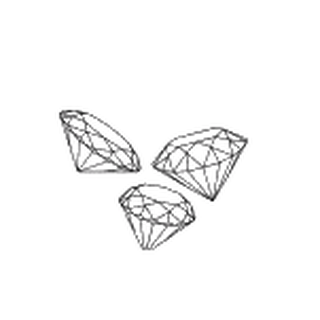
A Portuguese cut stacks additional rows into that same outline. Instead of a single ring of star and kite facets on the crown, it adds one or more extra concentric rows, so the facets step down from the table to the girdle in tiers. The pavilion is treated the same way, with extra rows leading to the culet. The result is a face full of small facets arranged in rings, one inside the next.
Three things are true of a Portuguese cut, and worth stating plainly because the term gets used loosely elsewhere:
Extra facet rows. The defining feature is additional concentric rows of star and kite facets on both the crown and the pavilion, beyond the single row a standard brilliant carries.
A high total facet count. Exact counts are not standardized and vary by cutter, but a Portuguese cut commonly carries well over 100 facets, roughly double a standard round brilliant.
A brilliant, not a step cut. The facets are triangular and kite shaped and radiate outward, so light bounces and scatters. This is the opposite of the long parallel steps of an emerald cut.
Because more facets means more, smaller reflecting surfaces, the cut is labor intensive and demands precise symmetry. When it is done well, those rings line up cleanly and the pattern looks deliberate rather than busy for its own sake.
The Look: Fire and Kaleidoscopic Scintillation
It helps to separate the three ways a diamond returns light. Brilliance is the white light it reflects. Fire is the way it splits white light into spectral colors, the flashes of red, blue, and orange you see. Scintillation is the flashing sparkle you get as the stone, the light, or your eye moves. A Portuguese cut is built to maximize the last two.
With so many small facets, a Portuguese cut throws off a dense, rapid twinkle. Each tiny facet acts as its own mirror, so instead of a handful of large flashes you get a shower of small ones, often described as a crushed-light or kaleidoscopic effect. The many facets also give dispersion more edges to work with, which is why the cut is known for pronounced fire. Move your hand and the whole face seems to shimmer and shift color.
One honest note: the exact sparkle depends on how a specific stone is cut and proportioned, not just on the name. Two diamonds both sold as Portuguese cut can look different depending on their symmetry and depth. If maximum sparkle is what draws you, look at the actual stone in good light rather than trusting the label alone. You can compare its look against the other outlines in our diamond shapes guide to see how the faceting style changes the character of a stone.
Round Versus Cushion Portuguese Cuts
The faceting is what makes a Portuguese cut, but it sits inside an outline, and there are two common ones. Keeping them separate helps, because the outline changes the character even when the facet style is the same.
Round Portuguese cut. A circular outline with the dense concentric faceting inside it. This is the most common form. It reads symmetrical and precise, and the rings of facets show as clean circles.
Cushion Portuguese cut. A softened square or rectangle with gently rounded corners, a pillow outline, carrying the same extra facet rows. It reads warmer and more antique, and it tends to look a touch larger and chunkier than a round of the same weight.
Neither is better. The round is the cleaner, more classical version, while the cushion leans into the vintage feel. Choose the outline first for its shape on the finger, then judge the faceting on the individual stone.
Portuguese Cut vs a Standard Round Brilliant
A round Portuguese cut and a standard round brilliant can share the same circular outline, so the difference is entirely in the faceting and the sparkle it produces. The simplest way to keep them straight: same shape, very different light.
| Standard round brilliant | Portuguese cut | |
| Facet rows | One ring of star and kite facets on the crown, one row on the pavilion | Extra concentric rows on both crown and pavilion |
| Facet count | 57 or 58 | Not standardized, commonly well over 100 |
| Sparkle | Larger, bolder flashes of brilliance | Many small flashes, dense and kaleidoscopic |
| Character | Modern, clean, familiar | Antique, intricate, uncommon |
| Both | Brilliant cuts on a round outline, and both real diamonds when the report checks out | |
If you already know the modern round and want to understand how cut names map to actual shapes, our guide to diamond cut versus shape covers why the two terms get mixed up in the first place.
Portuguese Cut vs Other Antique Cuts
People often group the Portuguese cut with other vintage cuts, and it belongs in that family, but it is the outlier on facet count. Most antique cuts have fewer, larger facets than a modern round. The Portuguese cut goes the other way and adds facets.
Old European cut. A round antique cut with a small table, a high crown, and a large open culet. It has around the same 57 or 58 facets as a modern round, but they are larger and chunkier, so it gives broad, soft flashes. See our old European cut guide for the full picture.
Old mine cut. A cushiony antique cut with the same large, chunky faceting as the old European, just on a softened square outline. Warm, gentle sparkle, not dense scintillation.
Rose cut. A flat base with a domed, faceted top and no pavilion at all, so it glows softly rather than sparkling. It sits at the opposite end from the Portuguese cut.
Portuguese cut. The intricate one. More facets than a modern round, arranged in extra rings, for the busiest, most fiery sparkle of the group.
So if the appeal of antique cuts is usually their soft, romantic light, the Portuguese cut is the exception that trades softness for intensity. It is antique in feel but maximal in sparkle.
Portuguese Cut in a Lab Grown Diamond
A Portuguese cut can be cut into a Lab Grown Diamond exactly as it can into a mined one. The cut is about how the rough is faceted, not where the crystal came from. Lab Grown Diamonds are real diamonds, identical in material and hardness to mined diamonds, both a 10 on the Mohs scale, so they take this intricate faceting and hold their polish just the same.
There is a practical upside. Because a Portuguese cut is labor intensive, with all those extra facets to place and polish, it has historically been a specialty cut you did not see often. Lab Grown Diamonds make an antique-style fancy cut like this more accessible, which is a large part of why it is easier to find today. If you want to see live examples, our Portuguese cut Lab Grown Diamonds are each hand-set in NYC and sold with an independent grading report. As with any cut, the origin does not change what the shape is: confirm both the faceting and the lab-grown status on that report.
Who a Portuguese Cut Suits
A Portuguese cut suits someone who wants maximum sparkle above all else. If the dense, kaleidoscopic twinkle and strong fire are what catch your eye, this cut is built for exactly that. It also suits antique and vintage lovers who want an old-world feel with more life than the soft, chunky faceting of most period cuts delivers. And because it is uncommon, it suits anyone who would rather not wear the same round or oval as everyone else.
One thing it is not: a value play. A diamond, in any cut, is a love piece rather than an investment, so choose a Portuguese cut because you love how it moves in the light, not because you expect it to appreciate. The reason to buy this cut is the sparkle and the character, full stop. If you want to see how different outlines wear on the hand before deciding, our note on which diamond shape looks biggest is a useful companion read.
How to Verify One on a Report
Because "Portuguese cut" is a trade description rather than an official lab shape, the reliable way to know what you are buying is to read the grading report, not to trust the label. Here is what to check, on ours or anyone's.
Confirm the report itself
Find the grading report and type its number into the issuing lab's own website to confirm it matches the stone. For a Lab Grown Diamond, IGI and GCAL still issue full 4C-style reports; GIA has graded Lab Grown Diamonds on Premium and Standard descriptive tiers since October 1, 2025 (Source: GIA, 2025-10-01).
Check the girdle for a laser inscription, including the "LG" marking that identifies a Lab Grown Diamond.
Read the geometry off the report
Read the shape and cutting-style line. It will name the outline and style, for example round or cushion, modified brilliant, rather than printing the words "Portuguese cut."
Use the measurements line for length, width, and depth in millimeters so you know the true size and outline of the stone.
Remember that most fancy and antique-style cuts carry no overall cut grade from the labs, so cut quality varies. Look at the actual stone and its symmetry rather than assuming the name guarantees the sparkle.
For a full walkthrough of every line on the certificate, see our guide to how to read a diamond grading report. The whole rule in one line: a name is marketing, the report is fact.
Where Stienhardt Fits
The Portuguese cut is an established antique-style cut used across the trade, and no single house owns it. To be exact about provenance: we did not invent, name, standardize, or popularize it. What we do is publish a clear, citable definition of the cut and offer it in Lab Grown Diamonds that we hand-set and finish in NYC.
Stienhardt is a New York City jeweler that sources Lab Grown Diamonds and sells direct, with in-person viewings by appointment. Because we own and inspect every stone we sell, we can hand you its independent grading report rather than just drop-ship it. That is also why we keep repeating the same advice, even about our own work: confirm the actual faceting and read the graded report behind any stone sold under a cut name, ours included. A name is marketing. The report is fact.
If you would rather judge a stone in person, we show by appointment in New York. Book a viewing.
Browse by Category
Related Posts


Popular Posts


FAQ's
A Portuguese cut is an antique-style brilliant with extra rows of facets: additional concentric rows of star and kite facets on both the crown and the pavilion, well beyond the 57 or 58 facets of a standard round brilliant, cut on a round or cushion outline. That dense faceting produces intense fire and a busy, kaleidoscopic, crushed-light sparkle. It is a trade description, not an officially recognized gemological shape.
More than a standard round brilliant, which has 57 or 58. A Portuguese cut adds extra concentric rows of star and kite facets on both the crown and the pavilion, so it commonly carries well over 100 facets, roughly double a modern round. The exact count is not standardized and varies by cutter, so read the specific stone rather than assuming a fixed number.
The extra facets. Each small facet acts as its own tiny mirror, so instead of a few broad flashes you get a shower of small ones, a dense, kaleidoscopic scintillation. The many facet edges also give dispersion more to work with, which is why the cut is known for pronounced fire. The exact effect still depends on how well the individual stone is cut and proportioned.
They can share the same round outline, so the difference is the faceting. A standard round brilliant has one ring of star and kite facets on the crown and one row on the pavilion, for 57 or 58 facets and larger, bolder flashes. A Portuguese cut adds extra concentric rows on both, for many more facets and a denser, more kaleidoscopic sparkle with stronger fire.
Yes. The cut is about how the stone is faceted, not where the crystal came from, and Lab Grown Diamonds are real diamonds, identical in material and hardness to mined diamonds. Because Lab Grown Diamonds make labor-intensive antique-style cuts more accessible, the Portuguese cut is easier to find today. Confirm both the faceting and the lab-grown status on the grading report.
Read the grading report and confirm its number on the issuing lab's own site; for a Lab Grown Diamond, IGI and GCAL still issue full 4C-style reports, while GIA has graded Lab Grown Diamonds on Premium and Standard descriptive tiers since October 1, 2025 (Source: GIA, 2025-10-01). Read the shape and cutting-style line, which names the outline and style rather than the words "Portuguese cut," check the millimeter measurements, and look for the girdle inscription, including the "LG" marking if it is a Lab Grown Diamond. A name is marketing; the report is fact.