




What Is an Old European Cut Diamond?
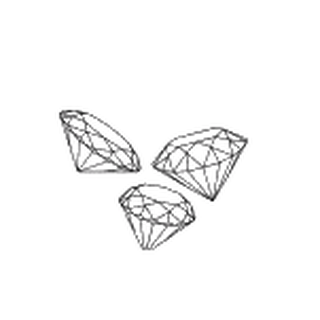
An old European cut is an antique round diamond: a circular outline with a tall crown, a small flat table on top, and an open culet, the small flat facet at the bottom that reads as a tiny circle when you look straight down into the stone. Hand-cut mostly between the 1890s and the 1930s, it is the direct ancestor of the modern round brilliant, and it was proportioned for candlelight and early electric light, so it glows with broad, warm flashes rather than the tight, bright sparkle of a modern round.
That is the whole definition. Here is what each feature does, how the old European cut differs from its cushion-shaped cousin the old mine cut and from the modern round brilliant, and what to check before buying one.
The anatomy of an old European cut
Four features define the old European cut, and they are nearly the same as the old mine cut, with one big difference: the outline is round.
A round outline
Seen face-up, an old European cut is a circle, like a modern round brilliant. This is the one feature that separates it from the cushion-shaped old mine cut: same antique character, round instead of soft-square.
A high crown and small table
The crown sits tall and the table is small, the proportions that make antique cuts throw broad, colorful flashes of fire rather than the many small bright sparkles of a modern round. It is a softer, warmer kind of brilliance.
An open culet
Like the old mine cut, the old European was finished with a small flat facet at the bottom rather than a sharp point. Look straight down through the stone and the open culet appears as a tiny circle at the center, a hallmark of a genuine antique cut or a faithful reproduction.
Chunky, hand-cut facets
Its 58 facets are larger and blockier than a modern round's, cut by hand rather than by machine. That is what gives the old European its signature look: big, bold flashes of light instead of fine, uniform sparkle, and a little individuality in every stone.
Where it comes from
The old European cut was the round diamond of the late Victorian, Edwardian, and Art Deco periods, roughly the 1890s to the 1930s. It grew directly out of the older cushion-shaped old mine cut as cutters began shaping rounder, more symmetrical stones, helped by the first cutting machinery. It was still proportioned for softer light, though, so it kept the tall crown, small table, and open culet that give antique cuts their warmth.
When the modern round brilliant was engineered in the mid-20th century for maximum sparkle under bright electric light, the old European cut was its last major ancestor. That heritage is why it is treasured today: it carries the romance of the Art Deco era, and modern cutting can reproduce the style, including on Lab Grown Diamonds, with the same high crown and open culet. It belongs to the same revived antique family as the rose cut and the old mine cut.
Old European vs old mine vs modern round
These three cuts trace one line of evolution. The difference is the outline and the era.
| Cut | Outline | Character |
| Old European cut | Round | Antique, high crown, open culet, warm broad flashes |
| Old mine cut | Soft square (cushion) | Antique, high crown, open culet, the cushion sibling |
| Modern round brilliant | Round | Machine-precise, closed culet, maximum bright sparkle |
In short: the old European and the modern round share a circular outline but sit a century apart in technology and sparkle, while the old European and the old mine share the same antique character and differ only in outline, round versus cushion. Our diamond shapes guide places every outline side by side if you are weighing the whole field.
What to check before you buy
Judge it by eye. Antique cuts carry no modern cut grade. Look at the actual stone face-up and choose one with lively, warm flashes and a symmetry you find pleasing; a faint open culet visible at the center is a feature, not a flaw.
Expect gentle irregularity. Hand-cutting means no two are identical, and slight asymmetry is authentic character. Inspect the edges of any genuinely old stone for chips or wear.
Know it faces up a touch smaller per carat. The tall crown holds weight in depth, so an old European can look slightly smaller face-up than a modern round of the same carat. You are buying character, not maximum spread; our guide to which diamond shape looks biggest covers the size-first options.
Read the grading report and confirm it. A Lab Grown old European cut carries the "LG" girdle inscription and is graded by the same labs as any stone, so read the grading report and confirm the number on the lab's own site.
And the framing that matters most: choose an old European cut for the romance and the warmth of it, the Art Deco glow that a modern round cannot quite reproduce. A diamond is a love piece, something you keep and that comes to mean something, not an investment. If that soft, historic brilliance is the look you want, nothing modern does it the same way.
If you would rather judge a stone in person, we show by appointment in New York. Book a viewing.
Browse by Category
Related Posts


Popular Posts


FAQ's
An old European cut is an antique round diamond with a high crown, a small table, and an open culet (a small flat facet at the bottom that reads as a tiny circle from above). Hand-cut mostly between the 1890s and the 1930s, it is the ancestor of the modern round brilliant and gives broad, warm flashes rather than modern bright sparkle.
The outline. An old European cut is round, while an old mine cut is a soft square (cushion). Both are antique with a high crown and open culet; the old European is essentially the round evolution of the cushion-shaped old mine cut, and it led directly to the modern round brilliant.
Both are round, but the old European has a taller crown, a smaller table, an open culet, and larger hand-cut facets, so it gives broad, warm flashes. The modern round brilliant is machine-cut with a closed culet and optimized proportions for maximum bright sparkle. One is antique warmth, the other is engineered brilliance.
They give broad, warm flashes of fire rather than the fine, bright sparkle of a modern round. The high crown, small table, and chunky hand-cut facets were designed for candlelight and early electric light. If you want maximum modern sparkle, a modern round brilliant is the better choice; the old European is chosen for its antique glow.
Yes. The old European is a cutting style, so it can be cut on Lab Grown Diamonds, reproducing the high crown, small table, and open culet with modern consistency. A Lab Grown old European cut is a real diamond, graded by the same labs and carrying the "LG" girdle inscription, and it costs well under a comparable mined antique stone.
Yes, if you love an antique, Art Deco look with soft, warm brilliance. Diamond is a 10 on the Mohs scale regardless of cut, so it wears well every day. Expect it to face up slightly smaller than a modern round of the same weight and to show gentle hand-cut character, both of which are part of its charm.